





Tooth loss can not only impair your ability to eat and speak but also your self-confidence and overall well-being. Although dental implants and high-quality dentures can be expensive, cheaper dentures offer a more affordable and accessible alternative to restoring your smile. This article is aimed at those who are missing teeth but cannot afford expensive implants and are looking for an affordable yet high-quality alternative to dental prosthetics – either domestically or abroad (e.g., in Hungary) at a cheaper price.
In this article, we look at the different types of affordable dental prosthetics, their costs, as well as advantages and disadvantages, and give you tips on how to find quality solutions. From this article, you’ll learn the following: 
- What do you do if you don’t have enough money for dental treatment or tooth replacement?
- What do you do if you don’t want an implant?
- Where can you get the cheapest dentures?
- Which dentures are the cheapest, and how much do they cost In Hungary?
What do you do if you don’t have enough money for dental treatment or tooth replacement?
If you need dental care, there are many affordable options and financial support programs to help you restore your smile without breaking your budget.
Find cheap or free dental clinics
Dental schools: Many dental schools offer low-cost treatments with supervised practice doctors. Community health clinics: Some government-funded clinics provide free or discounted dental care to those in need. Charities and non-profit organizations: Groups like Dentistry From The Heart, Mission of Mercy, and local charities sometimes offer free dental work.
Consider affordable alternatives
Cheaper Dental Prosthetics: Simple dentures are significantly cheaper than implants. Payment Discounts: Some dentists offer monthly installment plans for treatment. Discounted Dental Treatment Packages: Treatment packages with a higher discount.
Prioritize long-term treatment and prevention
Treat urgent problems first: If you cannot afford a complete dental restoration, ask your dentist if they can treat the most urgent problems first. Practical Oral Hygiene: Good oral hygiene – such as regular brushing and flossing – can significantly reduce the risk of dental problems, although some genetic or external factors may still require professional treatment.
Learn more about dental tourism
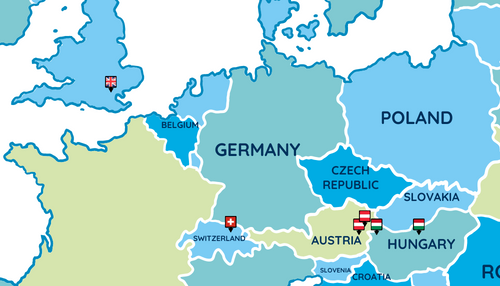 The main reasons for dental tourism: Cost Savings: Hungary, Turkey, Mexico, and Thailand are generally known for cheaper dental treatments, which can often allow for significant savings. However, it is important to also consider travel and accommodation costs, as well as the quality and trustworthiness of the clinics when making a decision. Even with travel costs, the total costs are often significantly lower than treatment in Germany, Austria, or Switzerland. High-Quality Dental Care: Numerous international dental clinics use state-of-the-art technologies and follow European and American standards. Highly qualified dentists, often trained at top universities, offer excellent care for a fraction of the price. Short Waiting Times: In many countries, dental treatments can be scheduled immediately, avoiding the long waiting lists common in Germany.
What do you do if you don’t want an implant?
If you are missing teeth but do not want dental implants, there are various alternative methods of dental reconstruction that can restore your smile and chewing function.
Full or Partial Dentures: A denture is one of the most cost-effective options. Unlike implants, dentures don’t require surgery and can be adjusted to your natural teeth and facial structure.
Later adjustments and daily care may be required.
Dental Bridges: Bridges are attached to adjacent teeth, providing a stable solution. The treatment is usually completed within a few weeks and blends seamlessly with your existing teeth.
Healthy teeth on both sides of the gap are required to support the bridge.
Resin-Bonded Bridge (Maryland Bridge): Unlike conventional bridges, they do not require grinding down adjacent teeth and are well-suited for replacing single missing teeth, especially in the front tooth area.
Less durable than conventional bridges, especially for molars with strong biting force.
Orthodontic Solutions (if space allows): In some cases, orthodontic treatment can close small gaps caused by missing teeth, making dental prosthetics unnecessary.
– Not suitable for large gaps or multiple missing teeth.
Where can you get the cheapest dentures?
Dental prosthetics abroad are possible in many countries, but Hungary is top in many respects. Below you will find a table with price comparisons of the different countries.
| Affordable dental restorations abroad | Hungary*, ** | Poland* | Turkey* | India* |
|---|---|---|---|---|
| Metal-ceramic crown | Hungary –350 € | Poland –460 € | Turkey –370 € | India –240 € |
| Zirconia crown | Hungary –450 € | Poland –590 € | Turkey –480 € | India –310 € |
| Two units bridge | Hungary –700 € | Poland –920 € | Turkey –740 € | India –490 € |
| 12 units full round bridge | Hungary –4 200 € | Poland –5 490 € | Turkey –4 440 € | India –2 920 € |
| I want to get a quote from Hungary*The indicated prices are average prices. **The prices are indicative, the treatment plan and quote is always prepared in Euro. Regardless, the payment of the treatments is possible in another currency (current daily Eur exchange rate). |
||||
Which dentures are the cheapest, and how much do they cost in Hungary?
If you are looking for the cheapest option to replace missing teeth, dentures are usually the least expensive option compared to dental implants and bridges. The cheapest types of dentures are:
Economy dentures (basic acrylic dentures): This is the least expensive option, made from inexpensive acrylic materials. They may look less natural and require adhesives for stability. Cost: €300* per arch
Partial dentures (for a few missing teeth): These are made with an acrylic or metal framework and are less expensive than full dentures if only a few teeth need to be replaced. Removable but more stable than economy dentures. Cost: €800* per arch
Immediate dentures (temporary and less expensive): These are placed immediately after tooth extraction and can be less expensive than permanent options. Often used as a temporary solution before permanent dentures. Cost: €1,500* per arch
Snap-on dentures (implant-supported, but still affordable): More stable than traditional dentures, but still less expensive than full implants. Uses mini implants for better support, removable or fixed. Cost: €3,000* per arch (cheaper than All on 4 implants)
*At BestDentalImplantsOnline clinics.
Frequently Asked Questions about Cheaper Dentures
- How can I tell in advance that an inexpensive prosthesis will still fit comfortably? Wearing comfort depends primarily on precise impressions, careful bite registration, and regular follow-up appointments. Even affordable dentures can feel very natural if they are individually fitted with precision.
- What is the difference between a private clinic and a dental school for budget treatment?
Dental schools often provide lower-cost care under supervision, but appointments may take longer. Private clinics are usually faster and offer more flexibility, but costs can be higher. - Are cheaper dentures more likely to break?
Not automatically. The durability depends on the material quality, thickness, and how well the denture is designed. Poorly fitted dentures tend to fracture more often than well-made ones. - Can I upgrade my denture later if my budget is limited now?
Yes. Many patients start with a basic removable denture and later switch to a more stable solution, such as an implant-retained denture, once finances allow. - Do cheaper dentures affect speech or pronunciation?
Some adaptation is normal, especially in the first days. A well-fitted denture should not significantly change speech, but adjustments may be needed to improve comfort and clarity. - What should I ask a clinic before choosing dentures abroad?
Important questions include: What materials are used? Who manufactures the denture? How are follow-up visits handled? And what warranty or repair options are available? - How often do dentures need to be relined or adjusted?
Over time, the jawbone and gums change shape. Most dentures require relining or minor adjustments every few years to maintain stability and prevent sore spots. - Is it safe to travel home shortly after getting new dentures?
In most cases, yes. However, it is recommended to have at least one final check-up before travelling, as small pressure points are easier to correct immediately.
If you would like a personalised treatment plan and transparent pricing, feel free to request a consultation. Check the prices: all on 4 costs, dental implants costs, dentures costs
